EVERY RECORD.
IN CONTEXT.
Connect document intake to the work, decisions, and custody around it.
Developed platform. Designed views illustrate document operations.Explore the case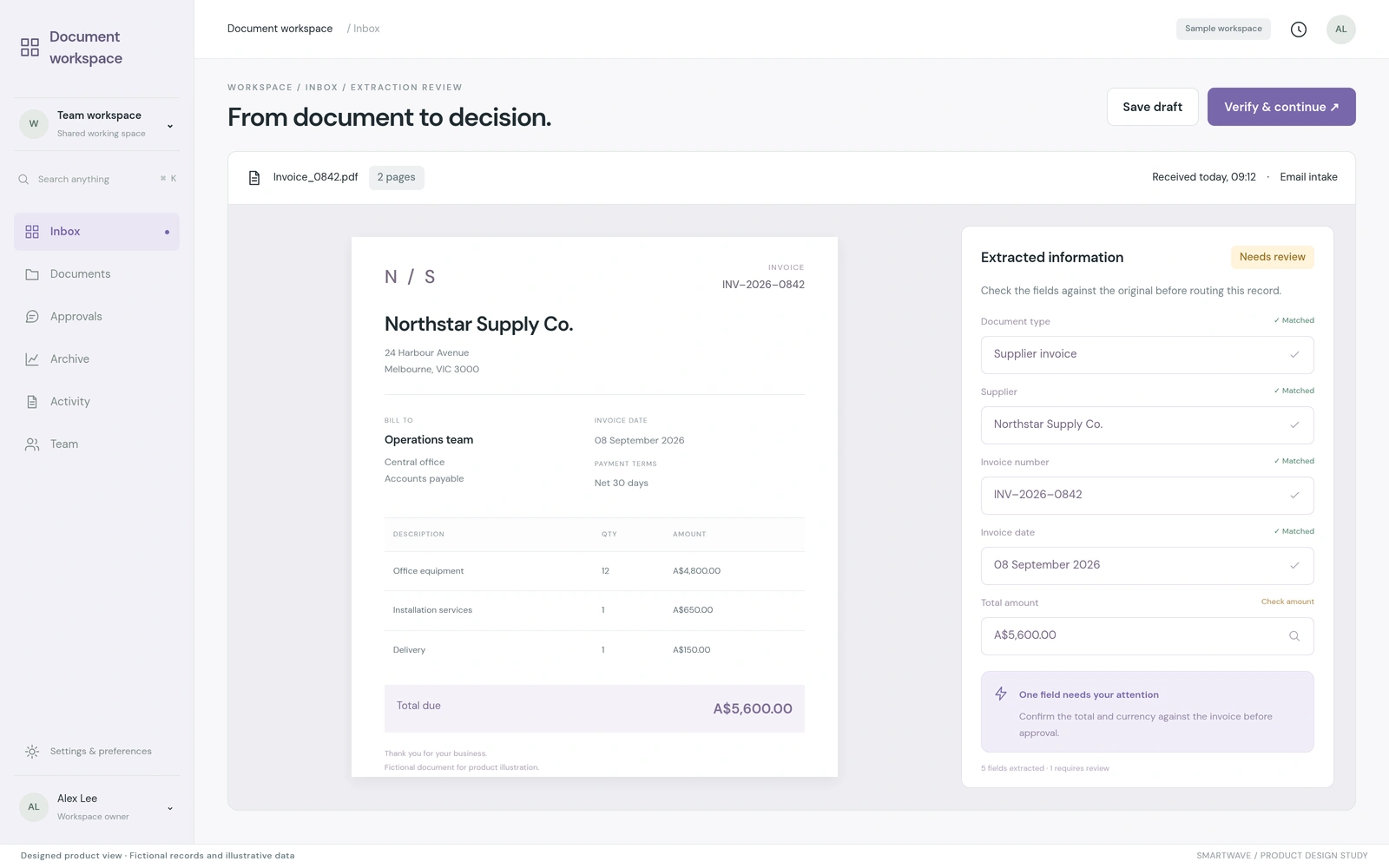
Source pages and extracted fields appear in one review surface.
Designed illustration of capture and extraction review.Enterprise operations
AI document management
Platform design & engineering
Designed product view · illustrative data
01Review extracted information before it drives work.
02Keep approval decisions attached to the record.
03Carry accountability through archive and retention.
THE FILE IS ONLY THE START OF THE RECORD.
A document passes through more than a folder. Someone receives it, checks its contents, requests an approval, revises it, and eventually needs to retrieve or dispose of it. When those steps are disconnected, the team must reconstruct the history before it can act.
We developed a document-management platform that connects capture, extraction review, search, and approvals with version history, custody, access rules, and retention. The operating model follows the record through its business lifecycle.
Records leaders should begin with the transactions that depend on documents. That establishes which fields require review, who can decide, and what evidence must remain available.
FOLLOW THE DOCUMENT THROUGH THE WORK.
REVIEW WHAT WAS CAPTURED.
An intake review places the source document beside extracted fields. The reviewer can assess the information in context before it becomes part of a downstream workflow.
THE DECISIONIs the captured information sufficient and accurate for this process?
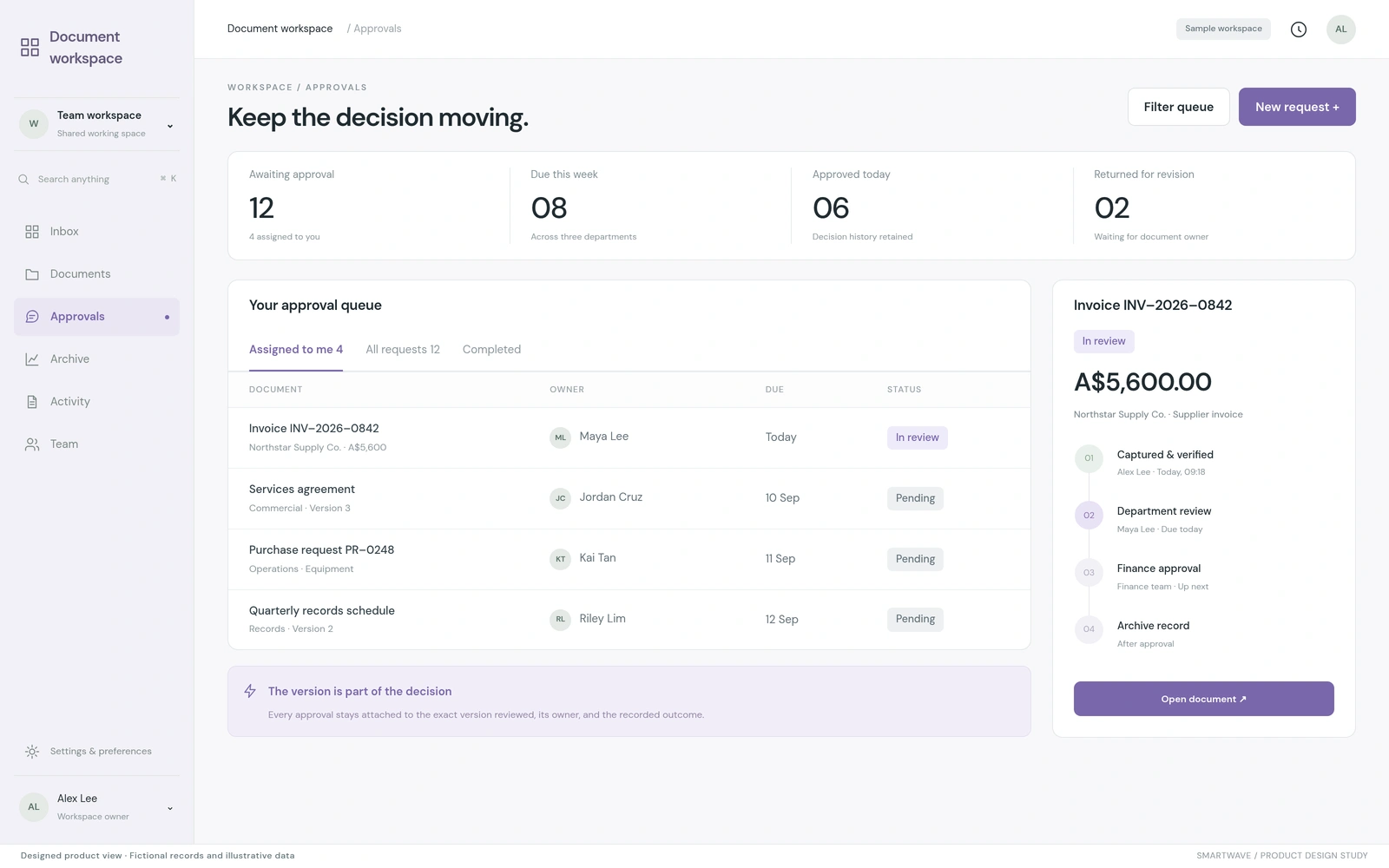
KEEP THE DECISION WITH THE FILE.
Approval work connects the document, its status, and the people responsible for the next step. Version history helps a reviewer understand which record they are approving.
THE DECISIONWho needs to act next, and which version is under review?
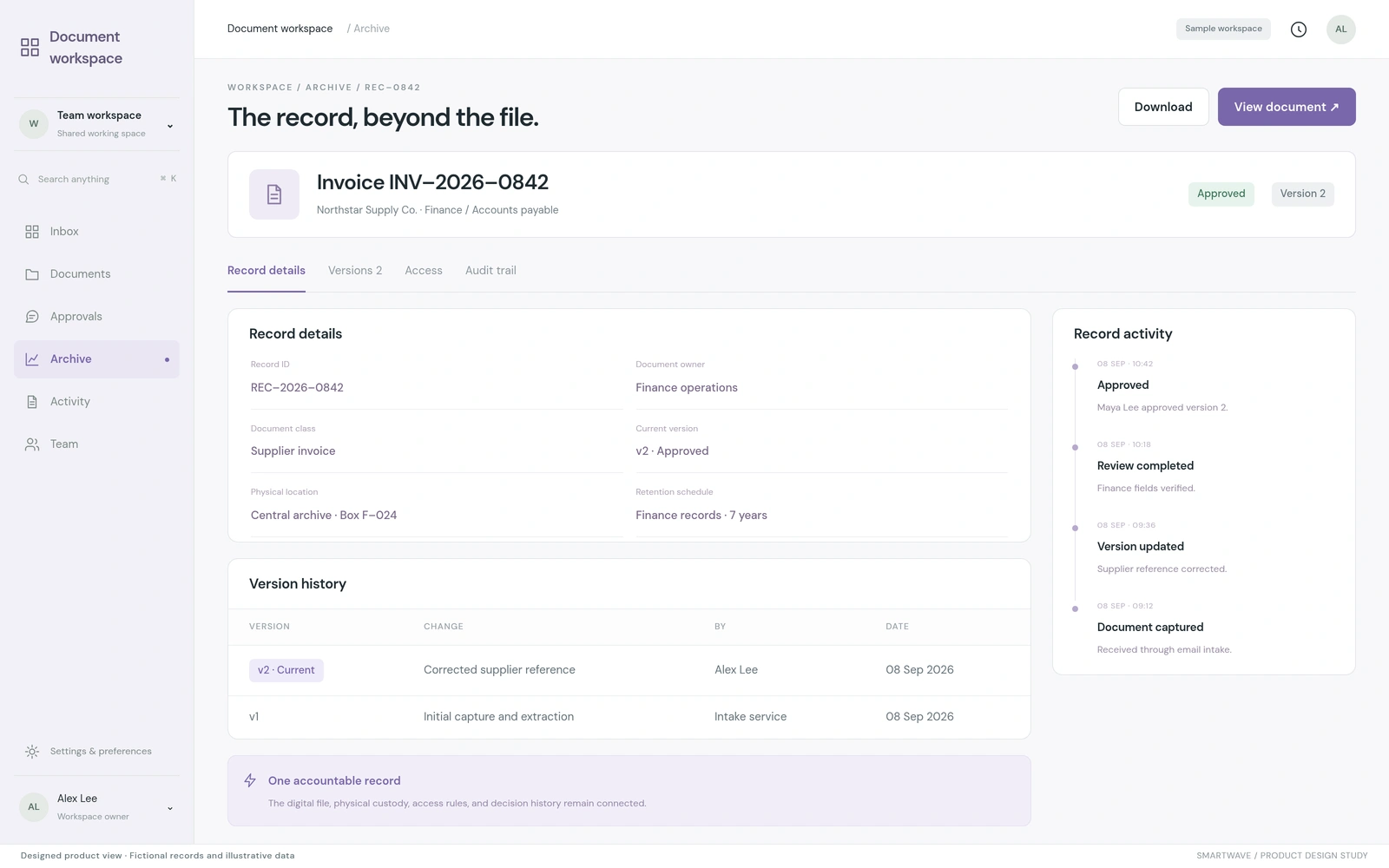
PRESERVE THE RECORD’S HISTORY.
The archive extends beyond retrieval. Custody, access, retention, and audit information help records teams account for a document after the immediate business task is complete.
THE DECISIONCan the team explain where the record is and what has happened to it?
ONE LIFECYCLE ACROSS SEVERAL SERVICES.
The developed platform separates the web experience, API, ingestion worker, domain rules, and external adapters. Shared contracts connect these layers so intake and review can use the same record definitions.
Document operations include access enforcement, versioning, approvals, and retention. External services sit behind adapters, while the domain layer holds the rules that determine how a record moves through the workflow.
- 01
CAPTURE
Receive a document and prepare extracted information.
- 02
REVIEW
Check the fields and associate the business record.
- 03
APPROVE
Route the work and retain the decision history.
- 04
RETAIN
Manage access, custody, and the record lifecycle.
VALIDATE THE RECORD, THEN THE WORKFLOW.
Acceptance should follow representative document types through intake, correction, approval, retrieval, and retention. Leaders need to establish the fields that require human verification and the roles authorised to approve or dispose of records.
The views illustrate the developed platform with fictional documents. Production rollout and processing savings remain unverified.
- Extraction review on representative source documents.
- Access and approval rules across the record lifecycle.
- Version, custody, and audit history after changes.