PROSPECTING.
WITH DIRECTION.
Bring agentic work into the effort of developing a sales pipeline.
Engagement scope. Concept screens illustrate a possible operating experience.Explore the case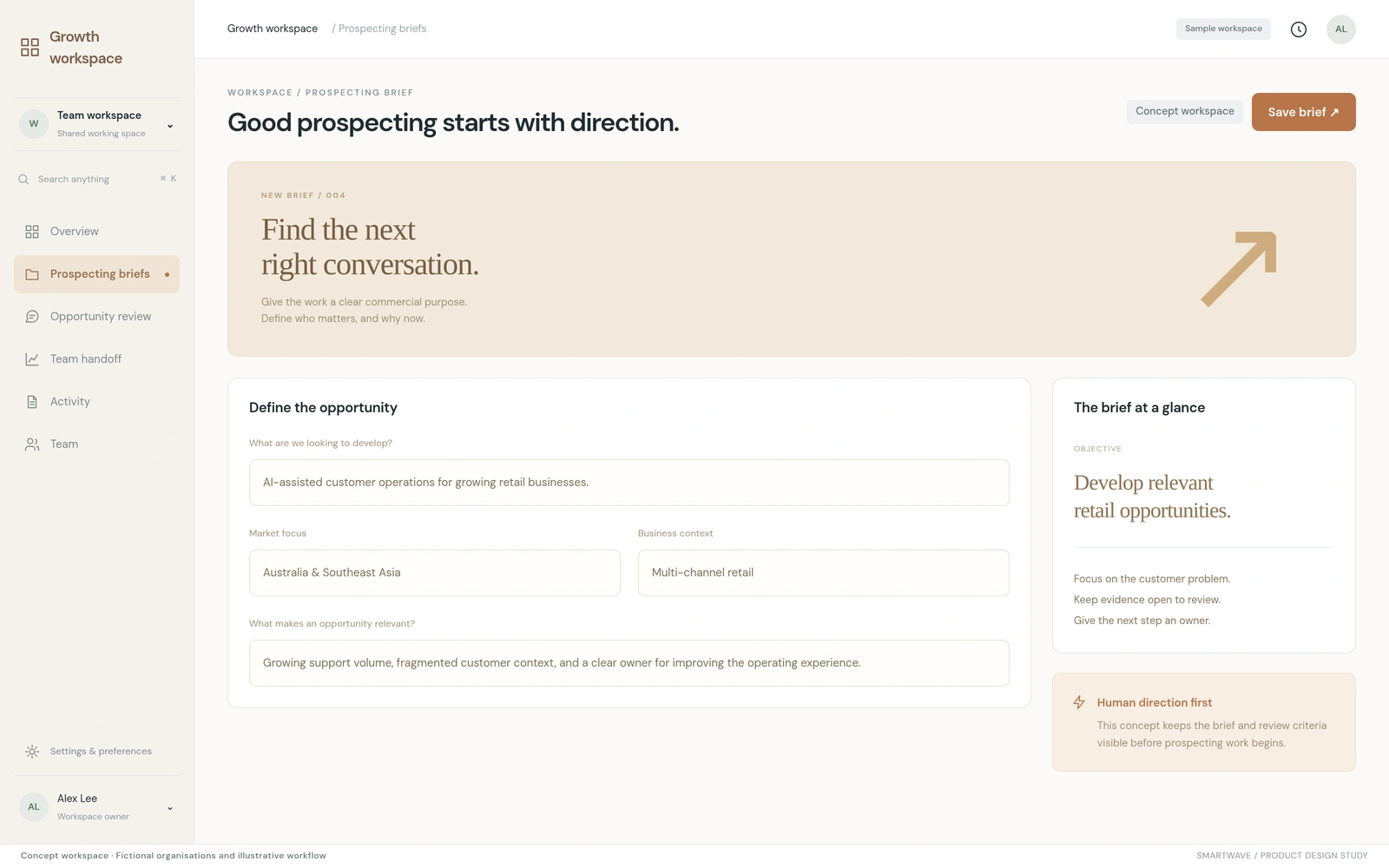
A concept brief records the team’s business-development direction.
Concept UI for a human-authored prospecting brief.Growth & sales
Lead-generation agents
Enterprise agent engagement
Concept screen · illustrative workflow
01Give the agent a clear business-development brief.
02Keep prospecting work open to team review.
03Make the intended next action explicit.
START WITH THE BUSINESS YOU WANT TO DEVELOP.
Business development requires a direction: the kind of opportunity the team wants to pursue and the work it expects an agent to support. Without that brief, activity can accumulate without helping the team build a useful pipeline.
The engagement brought lead-generation agents into a broader enterprise programme spanning growth, customer outreach, and legal work. The confirmed scope is agent-supported prospecting and business development.
A useful operating experience should make the brief, the work under review, and the intended next step visible. The concepts below show how that experience could be organised.
A CONCEPT FOR DIRECTING THE WORK.
SET THE PROSPECTING BRIEF.
The concept begins with a human-authored brief describing the opportunity the team wants to develop. It gives the work a business purpose and leaves room to clarify the boundaries before execution.
THE DECISIONWhat kind of business should this effort help the team develop?
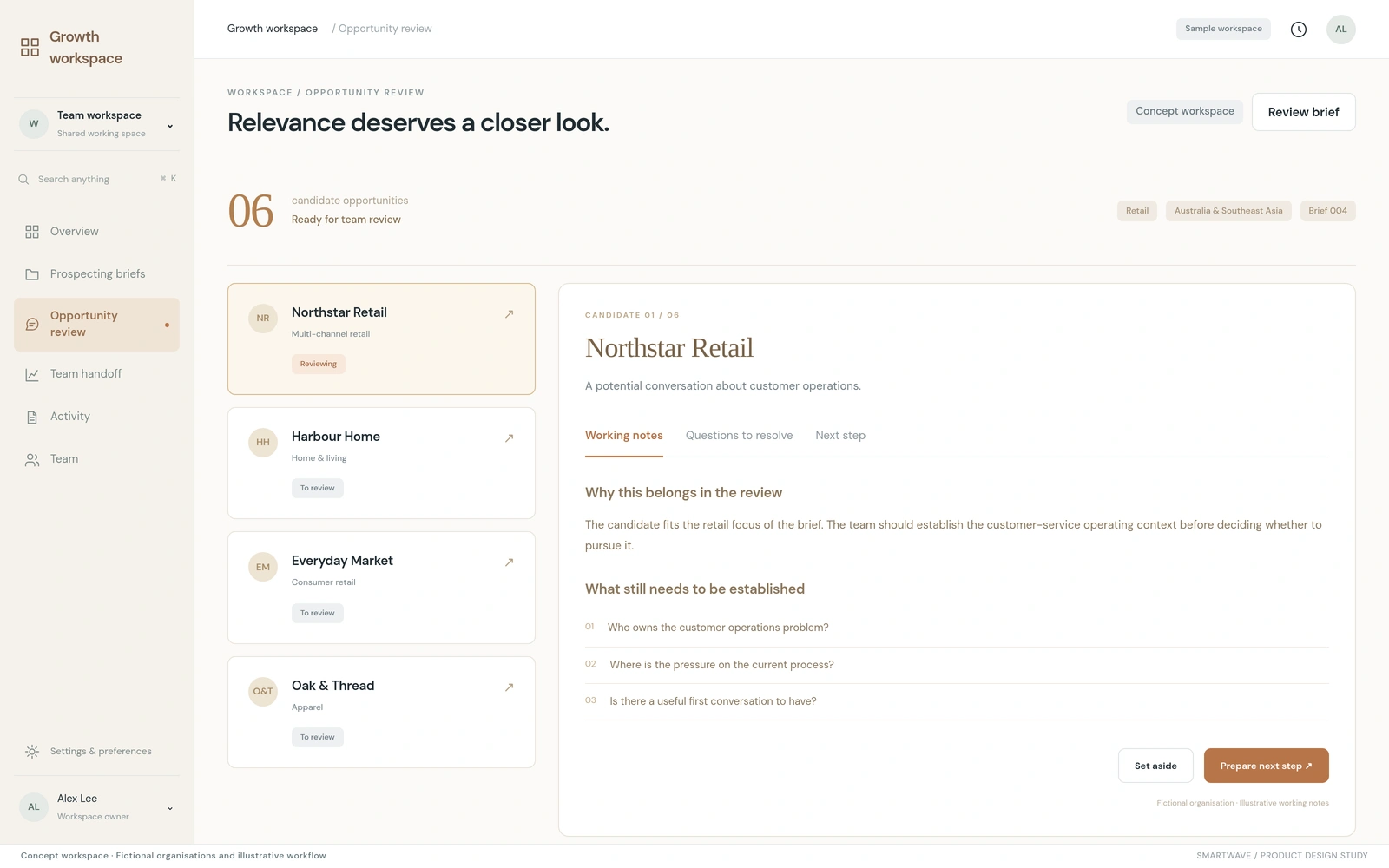
REVIEW THE WORK IN CONTEXT.
A review surface could bring candidate opportunities and working notes together. The team would use it to assess relevance and decide where further attention is justified.
THE DECISIONWhich candidate opportunities deserve further investigation?
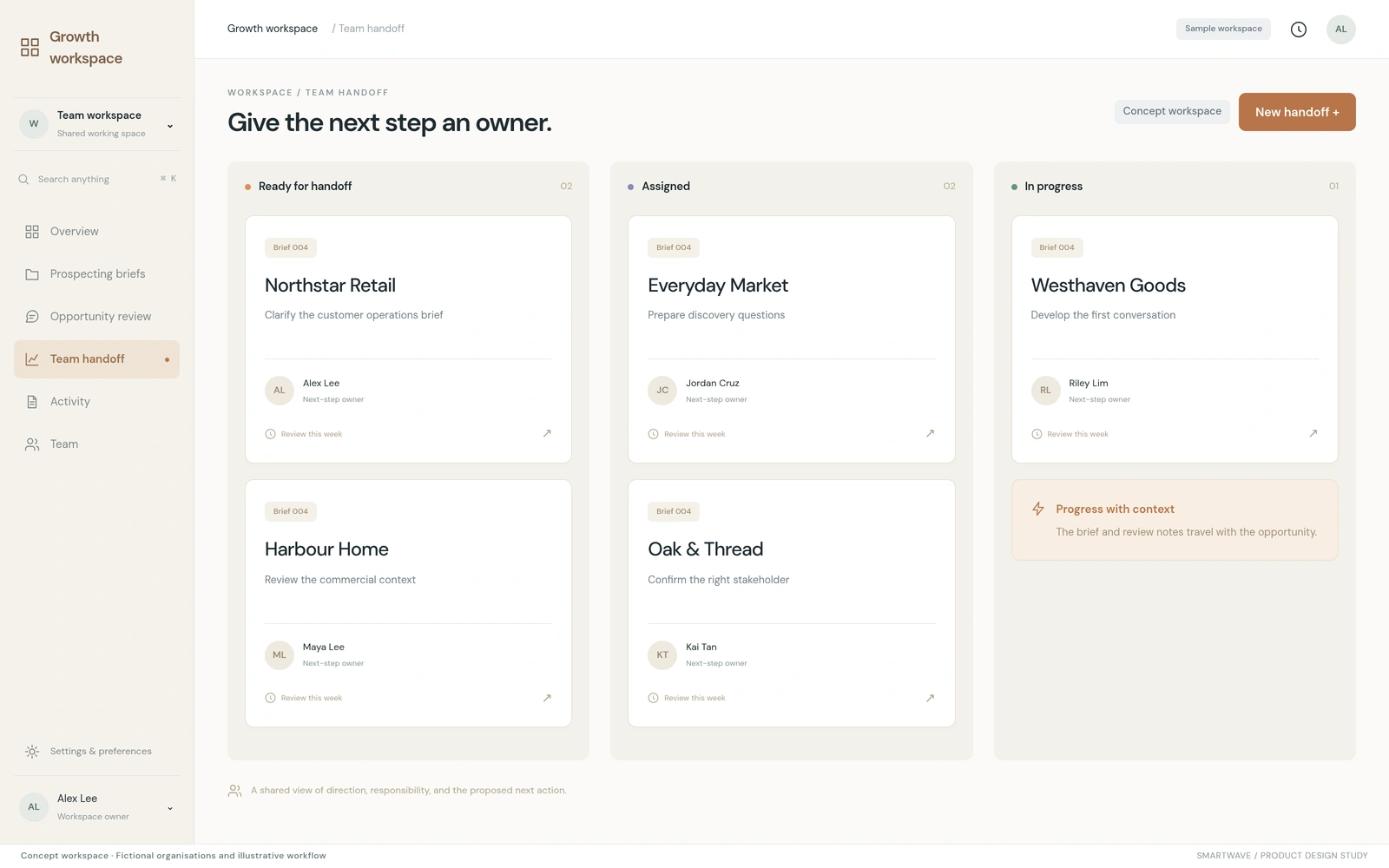
GIVE THE NEXT STEP AN OWNER.
A handoff concept makes the intended next action and responsible person visible. It illustrates how agent-supported work could connect to the team’s existing business-development practice.
THE DECISIONWho should take this forward, and what should happen next?
THE BRIEF DEFINES THE OPERATING BOUNDARY.
The established engagement scope is lead generation within an enterprise agent programme. The screens explore the human operating layer around that scope: direction, review, and follow-through.
Specific data sources, enrichment methods, scoring logic, CRM connections, and sending mechanisms require separate implementation evidence. They are not represented as delivered features in this case.
- 01
DIRECT
Define the business-development objective.
- 02
EXPLORE
Organise the prospecting work around that brief.
- 03
REVIEW
Assess the work and clarify what merits attention.
- 04
HAND OFF
Give the intended next step an owner.
JUDGE THE WORK BY ITS RELEVANCE.
A team adopting this pattern should agree on the evidence that makes an opportunity worth pursuing and the review required before the next action. Those decisions make the agent’s work assessable.
The views explore the operating experience around the confirmed engagement scope. Deployment details and commercial outcomes require separate evidence.
- A clear definition of the intended opportunity.
- Team review before advancing a candidate.
- An explicit owner for the proposed next step.