READ THE RECORD.
MOVE THE MATTER.
Bring document analysis and suggested revisions into the lawyer’s working day.
Implemented legal agent. Designed views use fictional document excerpts.Explore the case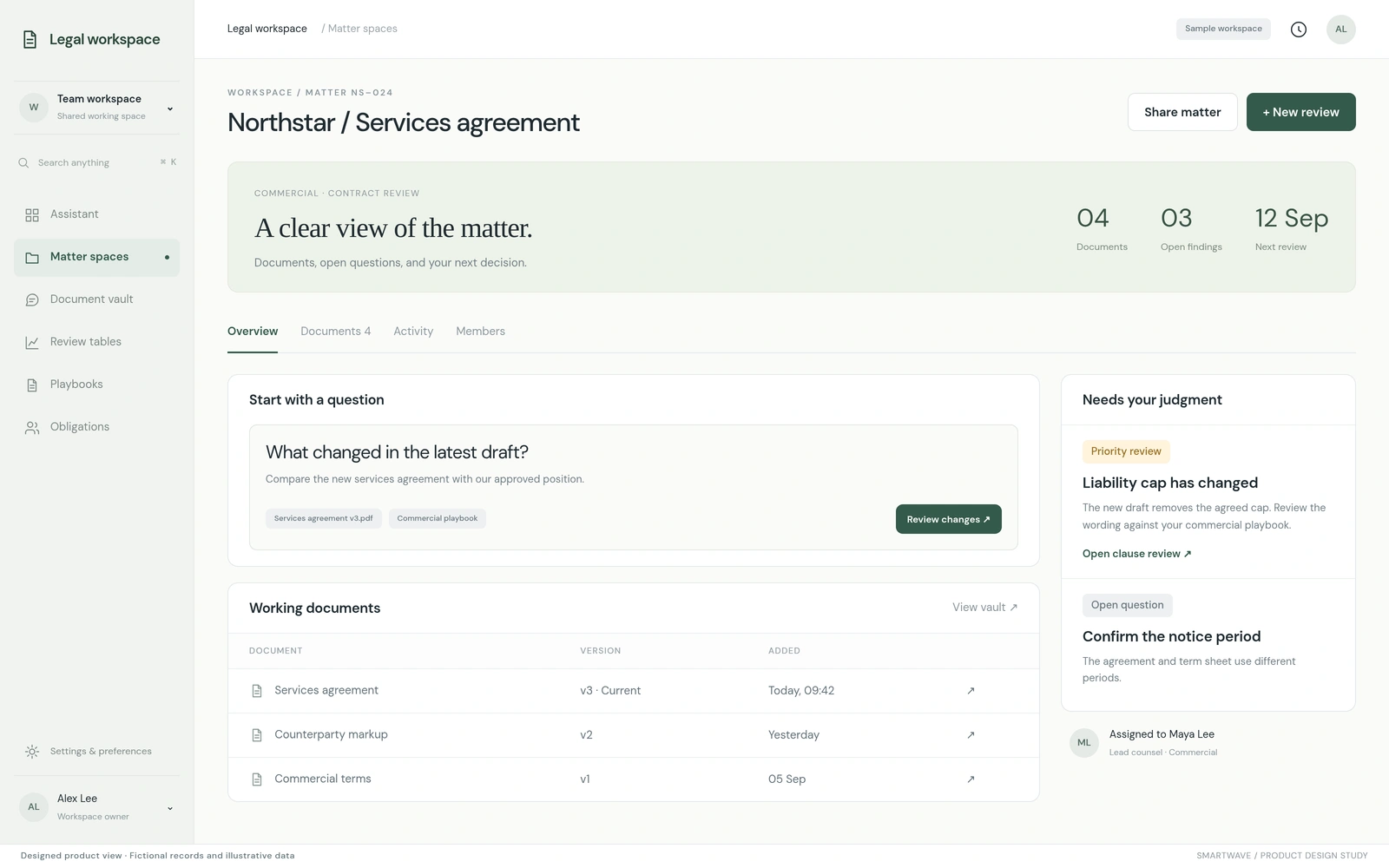
A matter workspace connects documents to an organised review task.
Fictional matter and document excerpts.Legal & professional services
Legal intelligence agent
Agent engineering & document integrations
Designed product view · fictional matter
01Keep the source material close to the analysis.
02Assess revisions against the team’s negotiating position.
03Leave the decision and application of changes with the lawyer.
MAKE THE BASIS FOR REVIEW EASIER TO INSPECT.
Legal work moves across documents, correspondence, and changing versions. Before a lawyer can decide what to accept or revise, they need to establish what the record says and how the proposed change affects the matter.
We built a legal agent that supports document intake, summaries, comparisons, playbook review, revision suggestions, timelines, and research. Email intake and a document-editor add-on bring these tasks closer to the surfaces where the team already works.
The useful unit of progress is a reviewable finding. Legal teams should require a clear connection between the source, the proposed interpretation, and the decision that remains theirs.
KEEP THE SOURCE BESIDE THE JUDGMENT.
ESTABLISH THE RECORD.
Intake and document tasks help the team identify key information and organise source material. Summaries, timelines, and comparison tasks provide different ways to examine the same matter.
THE DECISIONWhat does the available record establish, and where is further review needed?
REVIEW AGAINST A POSITION.
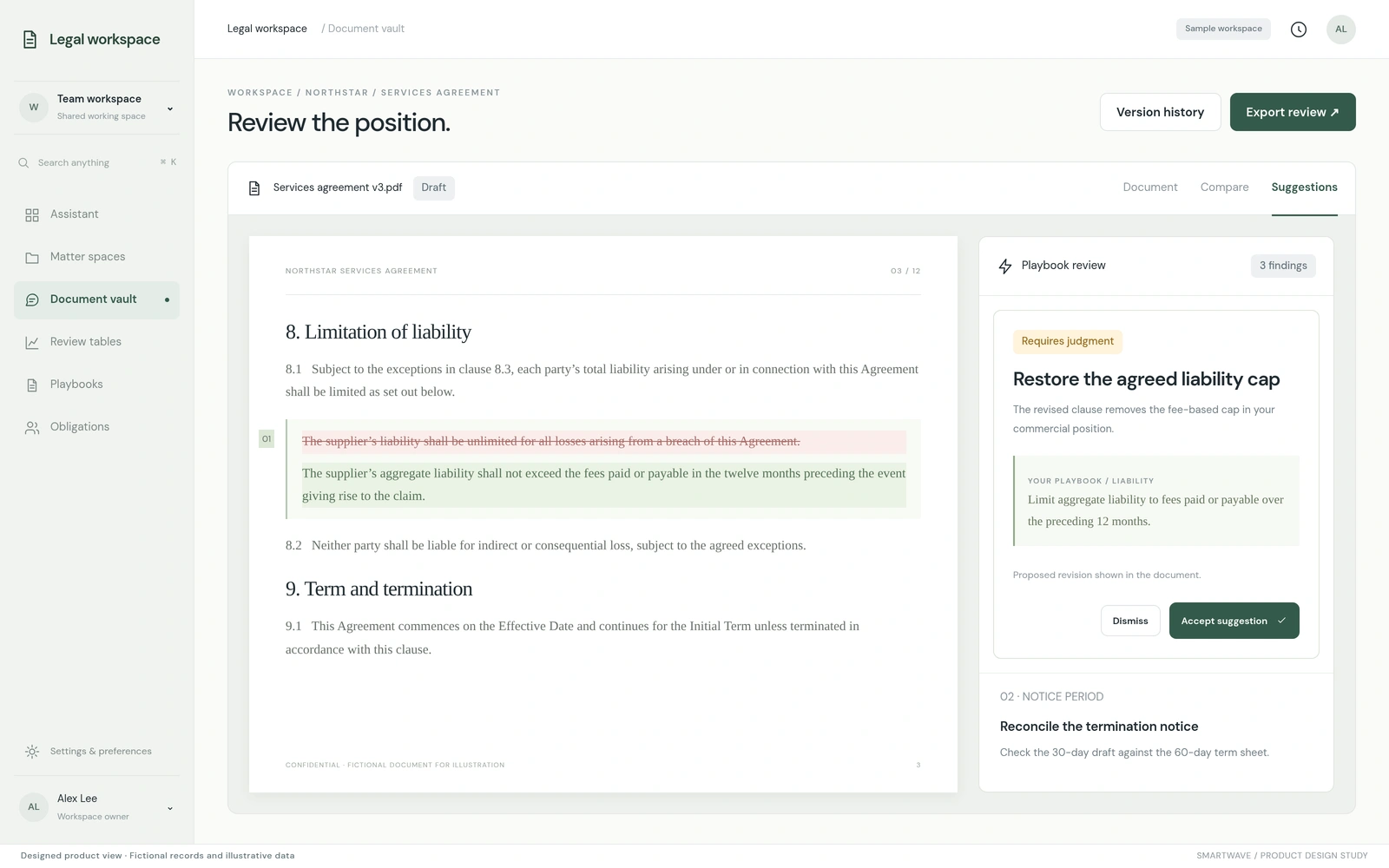
Contract review can assess deviations from a negotiating playbook. Suggested revisions and counterparty-change assessment give lawyers material to inspect against their own position.
THE DECISIONWhich proposed changes should the lawyer accept, reject, or negotiate?
FOLLOW THE SUPPORTING MATERIAL.
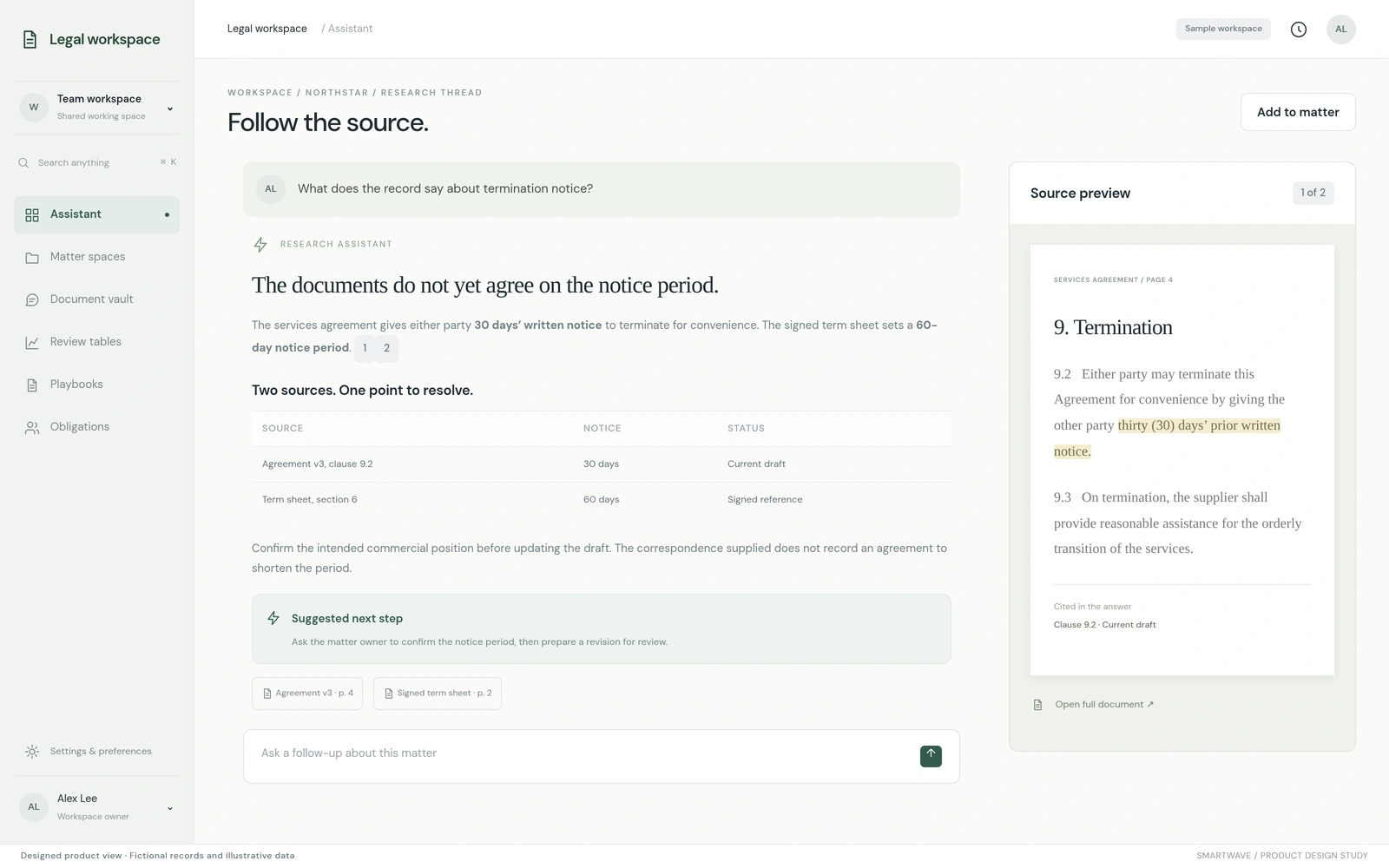
Research and document analysis can produce cited findings for inspection. The working surface keeps the source connection visible as the lawyer evaluates the output and decides what belongs in the matter.
THE DECISIONDoes the supporting material justify the finding the team intends to use?
TASKS CONNECT TO THE TEAM’S WORKING SURFACES.
A shared task catalogue defines the agent’s supported document and research activities. The web experience, email intake, and document-editor integration provide entry points into those tasks.
The revision workflow distinguishes requested changes, suggested wording, and assessment. Source-derived requests stay attached to the completed task that produced them, giving the reviewer context for the next decision.
- 01
GATHER
Bring the relevant documents and requests into scope.
- 02
ANALYSE
Run the chosen document or research task.
- 03
ASSESS
Inspect findings, source references, and proposed wording.
- 04
DECIDE
Let the lawyer determine which changes to apply.
TEST AGAINST THE SOURCE AND THE PLAYBOOK.
Legal teams should review source fidelity, quotation accuracy, missing context, and the treatment of counterparty requests. Suggested language needs the same professional review as any other draft entering the matter.
The designed views illustrate the implemented task model using fictional materials. The agent supports legal work; the lawyer retains responsibility for interpreting the record and making legal decisions.
- Findings trace back to the intended source material.
- Revision suggestions reflect the chosen negotiating position.
- A lawyer reviews changes before applying them.